SNAPBOX
Designing a faster, more intuitive local delivery experience
UX/UI Designer
Client Product
1 - 2 months
UX Research , UI Design
Snapbox began with a simple everyday frustration: needing to send a small item quickly across the city without relying on a full-sized delivery service or getting stuck in traffic. I saw an opportunity to design a lightweight, on-demand delivery experience built specifically for urgent, small-item logistics in busy urban environments.
The goal was to create an MVP that felt fast, simple, and trustworthy, allowing users to request a delivery in just a few steps while clearly understanding timing, pricing, and what to expect.
Existing delivery platforms often focus on food, groceries, or larger-scale logistics, leaving a gap for people who need to send small personal items quickly across the city. For urban users dealing with traffic, urgency, and busy schedules, the current experience can feel too slow, too limited, or too complicated. I wanted to explore how a local delivery product could better support these everyday moments, whether it’s sending forgotten essentials, small gifts, or time-sensitive personal items.
Urban delivery services are typically optimized for food orders or larger packages, leaving a gap for smaller, everyday items that people want delivered quickly and conveniently. Snapbox explores how motorcycle and scooter couriers can offer a faster, more flexible, and more affordable alternative for moving small items across traffic-heavy cities.
As the solo designer, I led the project end-to-end , from concept definition and early research to information architecture, wireframes, UI design, and usability testing. My focus was to translate a broad idea into a clear MVP experience that felt fast, simple, and trustworthy.
I designed Snapbox as a hyperlocal, on-demand delivery service built specifically for small-item transport in busy urban environments. Instead of optimizing for food, groceries, or larger packages, the concept focuses on quick, flexible everyday deliveries, from forgotten essentials to store pickups, gifts, or personal items.
By designing around motorcycle and scooter couriers, Snapbox creates a delivery experience that is:
Faster in traffic-heavy environments
More flexible for personal and local delivery needs
More affordable for short-distance, small-item trips
Research & Key Insights
To validate the concept, I surveyed potential users and spoke with people who regularly rely on delivery services in urban environments. I wanted to understand whether speed, flexibility, and trust were strong enough pain points to justify a more lightweight delivery experience.
They were willing to spend money to save time
liked the idea of a 24-hour, house-to-house delivery option
Reported using technology daily, reinforcing the need for a seamless digital experience
More than half had abandoned purchases or felt frustrated by slow delivery expectations
These insights confirmed that users wanted a delivery service that felt fast, reliable, and easy to use, especially for small, time-sensitive items.
Defining the MVP
A lightweight request flow focused on the essential actions needed to complete a delivery.
Enter pickup & drop-off
Capture only the location details needed to initiate the request quickly.
Describe the item
Limit the request to small items that fit the motorcycle logistics model.
Confirm timing & price
Reinforce trust with clear expectations before the user submits.
Key Product Decisions
A lightweight request flow focused on the essential actions needed to complete a delivery.
Designing around motorcycle logistics
By embracing the constraint of small-item delivery, the concept became more focused, more realistic, and more differentiated from larger car-based delivery platforms.
Reducing the request flow to three essential steps
This reduced friction and made the experience feel closer to sending a quick request than filling out a traditional delivery form.
Making trust visible early in the experience
Clear pricing, visible delivery details, and the concept of vetted local couriers helped position Snapbox as both fast and dependable.
The core flow begins with a lightweight entry point, where users can create an account or continue as a guest. From there, they move into the delivery request flow:
-
Choose how to get started
-
Enter pickup and drop-off locations
-
Add package details
-
Review delivery time and fare
-
Confirm payment and track the package
This structure kept the experience focused, intuitive, and low-friction.
Final Experience & UI Design
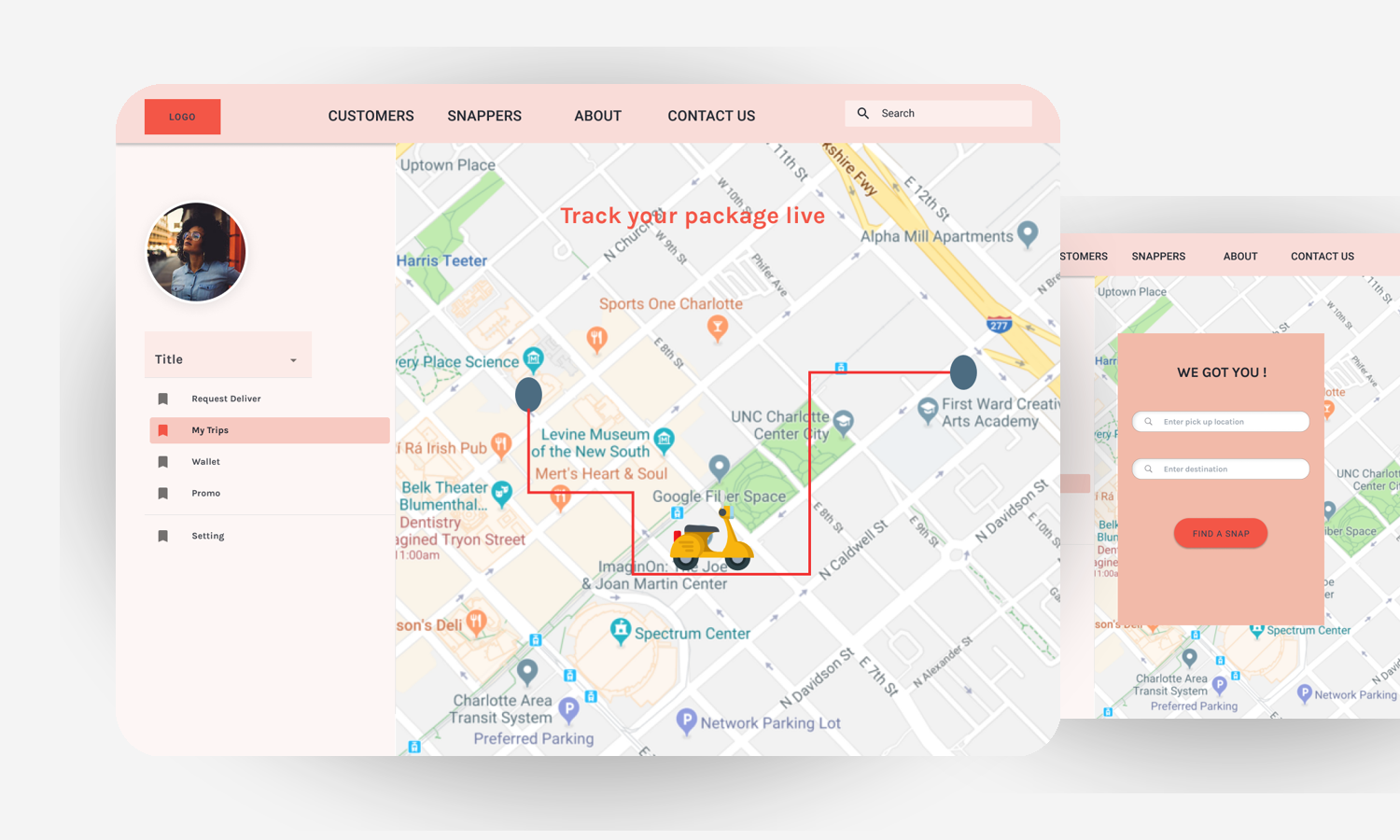
The final interface was designed to feel fast, intuitive, and trustworthy from the first interaction. I focused on clear hierarchy, simplified form patterns, and approachable visual cues that helped users move quickly through the request flow without feeling overwhelmed.
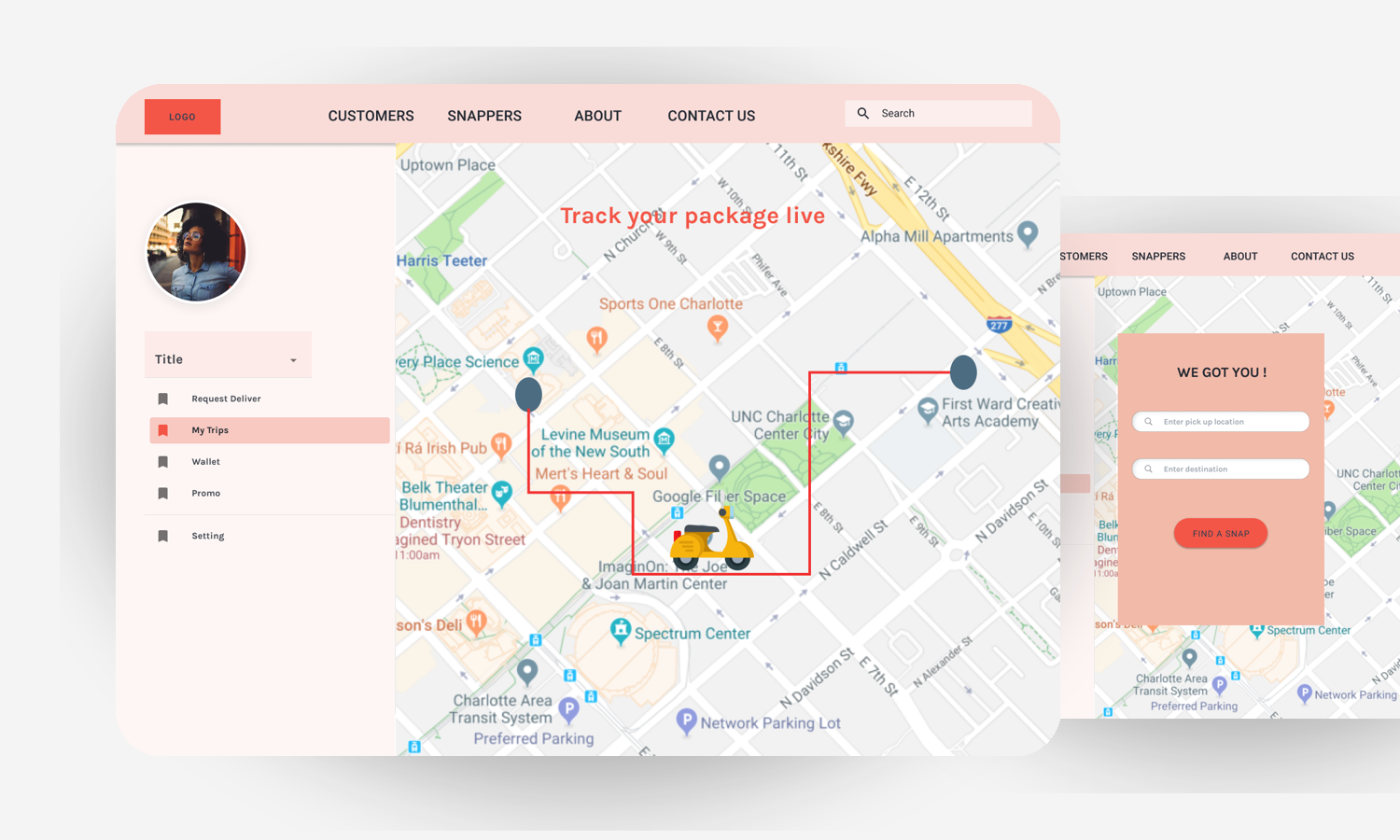
To evaluate the MVP, I tested the core experience across four key tasks, focusing on usability, navigation, and accessibility. Participants were asked to:
-
Log in as a customer
-
Request a delivery and review details
-
Access the contact page
-
Check for accessibility and navigation clarity
All participants successfully completed the core tasks, with the experience receiving an average 8.6/10 satisfaction score.
One of the biggest lessons I learned through Snapbox was knowing when to simplify by letting go. Earlier versions of the concept explored a broader set of features, but forcing too much into the MVP would have created a more confusing experience. Resetting the structure helped me design a cleaner, faster product that better matched the real user need.
This project also reinforced an important design principle for me: speed-oriented products should reduce decision-making, not add to it. Every screen should help users move forward with clarity and confidence. If I continued the project, my next focus would be expanding trust-building features such as live tracking, delivery status transparency, and stronger support touchpoints.